

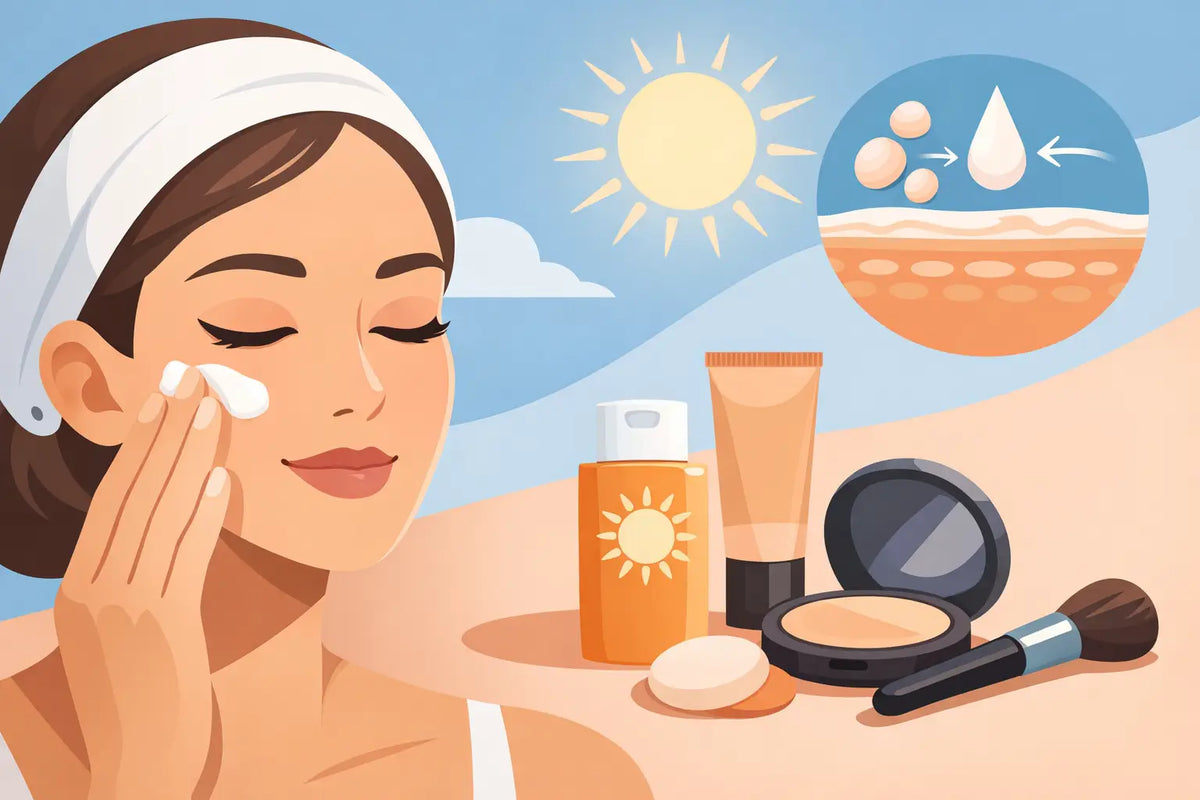
Your makeup can be fresh, glowing, and fully protected at the same time. The secret to apply sunscreen under makeup is not finding a magical foundation-friendly formula. It is giving each layer a little intention, a little space, and refusing to treat SPF like an afterthought.
Sunscreen is the nonnegotiable final step of skincare in the morning. It helps protect skin from the kind of daily exposure that can show up as uneven tone, dark spots, and a less bouncy-looking glow over time. And no, a light layer of foundation with SPF is not a substitute for a dedicated sunscreen underneath.
The good news: a polished makeup base does not require skipping your SPF 50. With the right formula and a calm, unhurried application, sun protection can become part of the ritual that makes you feel Happy Hour Ready before you walk out the door.
How to Apply Sunscreen Under Makeup
Start with skincare that has had a moment to settle. Cleanse, apply any lightweight treatments, then use moisturizer if your skin needs it. If your moisturizer is rich, especially around dry patches, use a thinner layer in the morning than you might at night. Too many creamy layers are one of the most common reasons makeup starts to slide or pill.
Once your skincare feels absorbed rather than wet, apply sunscreen generously. For the face alone, many dermatologists use the two-finger guideline: dispense two full lines of sunscreen along your index and middle fingers, then apply it evenly across the face. A quarter teaspoon is another helpful measurement. Your neck, ears, and chest need their own sunscreen, not whatever happens to be left on your hands.
Dot the product around your face, then spread it with gentle outward strokes. Finish by pressing your palms lightly over the skin. This helps smooth the film without rubbing away the coverage you just applied. Be especially careful along the hairline, around the nose, and near the eyes, where people often apply less than they need.
Then wait. Give sunscreen three to five minutes to form an even layer, or a bit longer if the formula still feels tacky. This small pause is the difference between a soft-focus base and that frustrating little roll of product that appears the second you touch it with concealer.
When the finish feels set, go in with primer only if you genuinely want one. Primer is optional, not a required extra step. If your sunscreen leaves skin smooth and comfortable, apply your complexion products directly over it. Use a damp sponge, a dense brush, or clean fingertips and press foundation into the skin instead of aggressively sweeping it around.
Choose Sunscreen for Your Makeup Mood
The best sunscreen under makeup is the one you will apply in the right amount every morning. Still, texture matters. A formula that feels beautiful on bare skin may not always play nicely with the base products you reach for on a busy weekday.
For dry or dull skin, look for a sunscreen with a moisturizing, radiant finish. These formulas can make foundation look more luminous and less likely to cling to dry areas. The trade-off is that a very dewy sunscreen paired with a rich moisturizer and a glowy foundation can look overly shiny by midday. In that case, keep your skincare lighter and use a little translucent powder only where you tend to get slick.
For combination or oily skin, a lightweight fluid, gel-cream, or soft-matte sunscreen often gives makeup more staying power. These textures can feel less slippery and may reduce shine around the forehead, nose, and chin. Do not confuse a matte finish with a reason to skip moisturizer, though. If your skin is dehydrated underneath, foundation can still separate or catch on texture.
Mineral sunscreens, which use zinc oxide and/or titanium dioxide, can be a lovely choice for sensitive skin and may leave a more primer-like finish. Some can create a visible cast or feel thicker, particularly on deeper skin tones. Tinted mineral formulas can help, but the tint should suit your complexion rather than force you to adjust your foundation shade.
Sunscreens made with organic UV filters often feel clear, weightless, and easy to layer. The right option depends on your skin, your eyes, and your routine. If sunscreen tends to sting when you sweat or wear it near the lash line, try a different formula rather than accepting the discomfort as part of the deal.
Why Sunscreen Pills Under Foundation
Pilling is not always a sign that your sunscreen is bad. Usually, it is a layering issue. Product buildup, too much rubbing, and formulas that do not sit comfortably together can all cause that crumbly texture.
First, simplify. If you are using a hydrating serum, a heavy moisturizer, sunscreen, primer, foundation, and glow drops, you have a lot of layers competing for space. Choose the steps your skin actually benefits from that day. In humid weather, you may find that serum plus sunscreen is enough. In colder weather, a little more moisture may be exactly what your makeup needs.
Next, use less friction. Skincare is usually applied with smoothing motions, but makeup performs better when it is pressed on top of sunscreen. Let the sunscreen set, then bounce your sponge across the face or stipple foundation with a brush. Build coverage gradually rather than trying to buff a full layer over the entire face at once.
It can also help to keep your finishes compatible. A silicone-rich primer and foundation can work beautifully over many sunscreens, but some combinations may roll when layered too quickly. Water-based products are not automatically better together either. There is no universal ingredient rule that beats a real-life wear test. Try your full routine at home on a low-stakes morning, then notice how it looks after a few hours.
Makeup Habits That Protect Your SPF Layer
Your goal is to place makeup over sunscreen, not blend the sunscreen into makeup. Mixing sunscreen with foundation, bronzing drops, or moisturizer may seem efficient, but it can make it harder to apply an even, protective amount. Wear sunscreen as its own layer first, then have fun with the rest.
Sheer complexion products are especially easy to make work. A skin tint, spot concealer, cream blush, and brushed-up brows can let your real skin show through while keeping the sunscreen film more intact. Full coverage foundation is absolutely possible too. Just use thin layers and press rather than drag.
Be thoughtful with makeup tools. A freshly washed sponge will apply product smoothly without depositing yesterday's oils and leftover foundation onto your face. Brushes should be clean enough that they do not cause patchiness. Your makeup-removing cloth belongs at night, when it is time to take everything off gently and let skin reset.
Setting spray can help makeup look more melded, but it does not replace sunscreen. Likewise, SPF powders and SPF mists can be nice touch-up options, but they are difficult to apply heavily enough to equal the protection of your morning sunscreen layer. Think of them as a convenient supplement, not your only plan.
Reapplying Sunscreen When You Are Wearing Makeup
If you are outdoors, near windows for long stretches, sweating, or spending time in direct sun, sunscreen needs to be reapplied about every two hours. That is the part of a makeup routine that requires a little flexibility.
For a makeup-free day, simply reapply your regular sunscreen generously. Over light makeup, a sunscreen stick can be practical if you apply it in several even passes and gently pat the skin afterward. A sunscreen mist can feel refreshing, but use enough product to cover the face evenly and avoid breathing it in. Let it dry before touching your complexion.
For a long outdoor day, the most reliable approach is often a reset: remove makeup, reapply sunscreen properly, and redo a quick fresh face. It may sound less glamorous than a three-second touch-up, but your skin gets the protection it deserves. Save the full makeup moment for when you can enjoy it, not when you are rushing between plans.
Sunscreen under makeup is not a compromise between looking good and taking care of your skin. It is the quiet confidence of knowing your glow has a little protection behind it. Take the extra few minutes, let the layers settle, and make your morning routine feel like the first toast to a very good day.


