

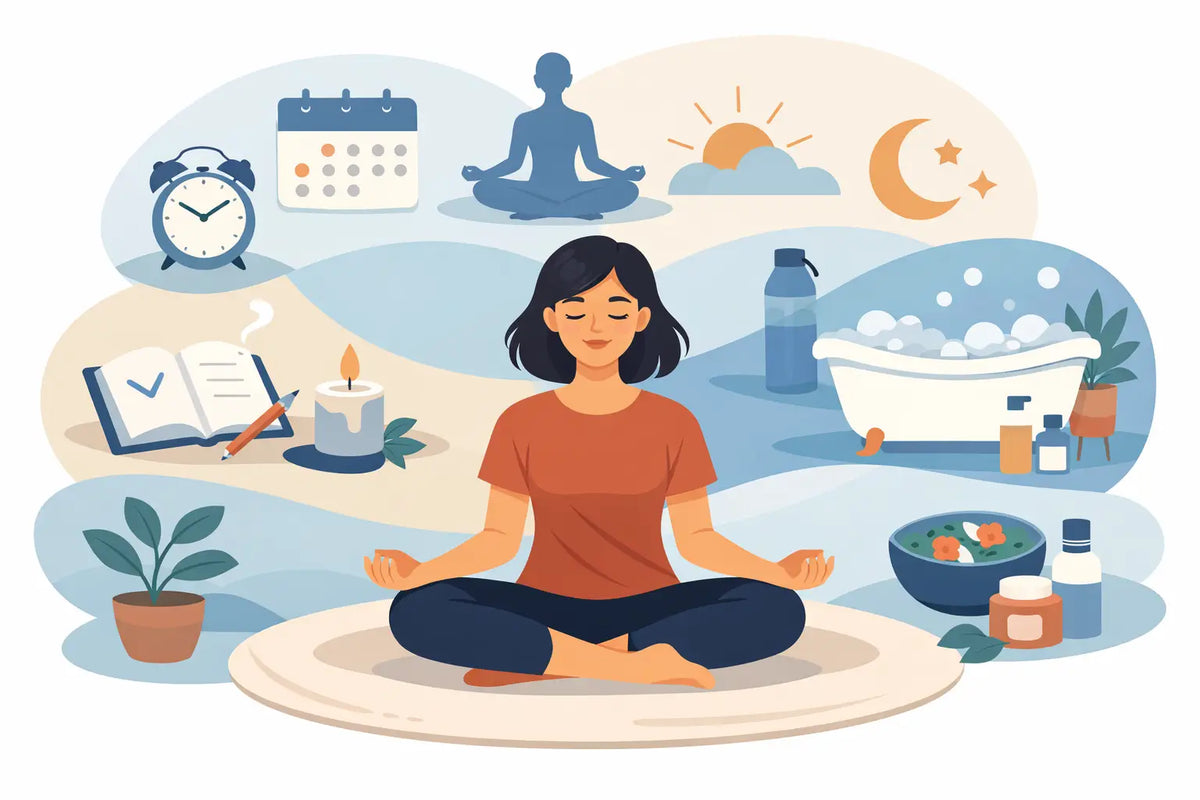
Some routines look gorgeous on social media and fall apart by Wednesday. That usually happens when your self-care plan asks too much, takes too long, or feels like another task on an already full day. If you're figuring out how to build a self care routine, the goal is not to create a perfect schedule. It's to create a rhythm that makes you feel better, look more refreshed, and fit your actual life.
The best self-care routine has a little bit of practicality and a little bit of pleasure. It should help you reset, not pressure you. Think less all-or-nothing, more small rituals with a payoff. A five-minute evening wind-down that leaves your skin clean and your mind calmer will always beat a complicated routine you avoid.
Start with the version of you that really exists
A good routine begins with honesty. Not your Sunday fantasy self with two open hours and a spotless bathroom counter. Your real self. The one rushing to work, answering texts late, remembering sunscreen halfway out the door, and wanting to feel pulled together without turning every day into a production.
That matters because self-care is deeply personal. For one person, it means a long shower, eye patches, and ten quiet minutes before bed. For another, it means simplifying everything so they can stay consistent. Neither approach is better. The routine that works is the one you can repeat.
Before you choose products or habits, decide what you actually want your routine to do. Maybe you want less stress in the morning. Maybe you want your skin to look more even and rested. Maybe you want a nightly ritual that helps you feel done with the day. A routine built around one or two clear outcomes is easier to keep than one built around vague pressure to do more.
How to build a self care routine around your day
The easiest way to make a routine stick is to attach it to moments that already happen. Waking up. Getting home. Taking off your makeup. Plugging in your phone at night. Self-care works better when it lives inside your day instead of floating somewhere outside it.
Morning routines should support the kind of day you want to have. That usually means keeping things simple. Cleanse if you need to, apply treatments that make sense for your skin, moisturize, and never skip sun protection. If your mornings are busy, this is not the time for a 12-step experiment. It's the time for products that do their job quickly and beautifully.
Evening is where you have more room to lean into the ritual. Removing makeup, cleansing thoroughly, applying targeted skincare, and doing one comforting extra step can turn the end of the day into something you look forward to. That extra step might be an LED mask while you answer messages, a bio-collagen mask before bed, or eye patches while you decompress. The point is not to do everything every night. The point is to create a mood you want to return to.
If your schedule changes constantly, build a flexible routine instead of a rigid one. Have a bare-minimum version for busy days and a more indulgent version for nights when you have time. That balance matters. A routine should support your life, not compete with it.
Keep your routine small enough to repeat
This is where people usually overdo it. A beautiful cart full of skincare and wellness extras can feel exciting at first, but consistency loves simplicity. If you're building from scratch, start with three anchors: cleanse, treat, protect.
From there, add one or two feel-good pieces that make the routine more enjoyable. Maybe it's pimple patches that make breakouts feel less dramatic. Maybe it's a lash and brow serum that turns maintenance into a tiny nightly luxury. Maybe it's a makeup removing cloth that makes the end-of-day reset faster and softer. These details matter because convenience is often what turns good intentions into habits.
There is also a trade-off to know here. More products can create a more indulgent experience, but they can also increase the chance that you'll skip the whole routine when you're tired. Fewer products may feel less exciting, but they often deliver better long-term results because you actually use them.
Build in results you can see and feel
A self-care routine becomes easier to keep when it gives you a payoff. That payoff can be emotional, visual, or both. Maybe your skin looks glowier after a week of consistent hydration and SPF. Maybe your room feels calmer because your evening routine signals that the day is over. Maybe you feel more confident leaving the house because your basics are handled.
Visible wins matter. They make a routine feel worthwhile. That is one reason beauty can be such a powerful entry point for self-care. Skincare and beauty tools offer a moment of calm now and a visible result later. Done well, they make daily maintenance feel less like upkeep and more like a reward.
This doesn't mean every step needs instant gratification. Some products work gradually. Some habits are more about steadiness than drama. But your routine should include at least one element that feels immediately satisfying, whether that's cooling eye patches, the clean finish of fresh SPF, or the comfort of washing the day off properly.
Create a routine that matches your energy
Not every day has the same mood, and your self-care routine doesn't need to pretend otherwise. Some mornings are quick and functional. Some evenings call for extra softness. The most sustainable routines leave room for both.
A helpful way to think about it is in layers. Your base layer is what you do almost every day. Your second layer is what you add when you need support. That might be breakout care during a stressful week, extra hydration when your skin looks dull, or a longer wind-down when you feel overstimulated.
This approach keeps you from treating self-care like a test you're failing. You are not behind if you skip the bonus step. You are simply responding to your real energy, which is exactly what self-care is supposed to help you do.
Make the experience feel elevated
If you want a routine to last, make it appealing. Put the products you use most where you can see them. Keep your counter edited. Choose textures, tools, and formulas that feel good in your hands. Light a candle if that's your thing. Put on a playlist. Let the whole experience feel a little more golden, a little less rushed.
This may sound aesthetic, but it is also practical. We return to rituals that feel good. We avoid routines that feel messy, confusing, or clinical. When your environment supports the habit, the habit asks less of your willpower.
That is part of what makes elevated essentials so effective. They don't just solve a problem. They make the process feel easier and more enjoyable. Happy Hour Beauty leans into that idea well: results matter, but so does the feeling of becoming more luminous, more rested, and more ready for whatever comes next.
Watch for the signs that your routine needs editing
A good routine is not set forever. Your skin changes. Your schedule changes. Your stress level changes. What worked in one season of life might feel too much in another.
Usually, the signs are obvious. You keep skipping steps. Your products pile up unused. Your skin feels irritated. The routine that was supposed to calm you starts feeling like homework. That's your cue to edit.
Often, the fix is not adding something new. It's removing friction. Shorten the routine. Move products to a more convenient spot. Save the high-effort steps for two nights a week instead of seven. If something no longer fits, let it go without guilt.
How to build a self care routine you actually keep
If you want your routine to last longer than a motivation kick, stop measuring it by intensity. Measure it by return. Does it help you feel more like yourself? Does it make your skin, mood, or evenings better in a way you can notice? Does it feel easy enough to repeat even when life is busy?
That is the standard. Not perfection. Not volume. Not how impressive it looks lined up on a shelf.
The strongest self-care routines are usually the quietest ones. A few products you love. A few habits that make a visible difference. A few moments in the day that belong only to you. Start there, keep what works, and let your routine become something you want, not something you owe.


