

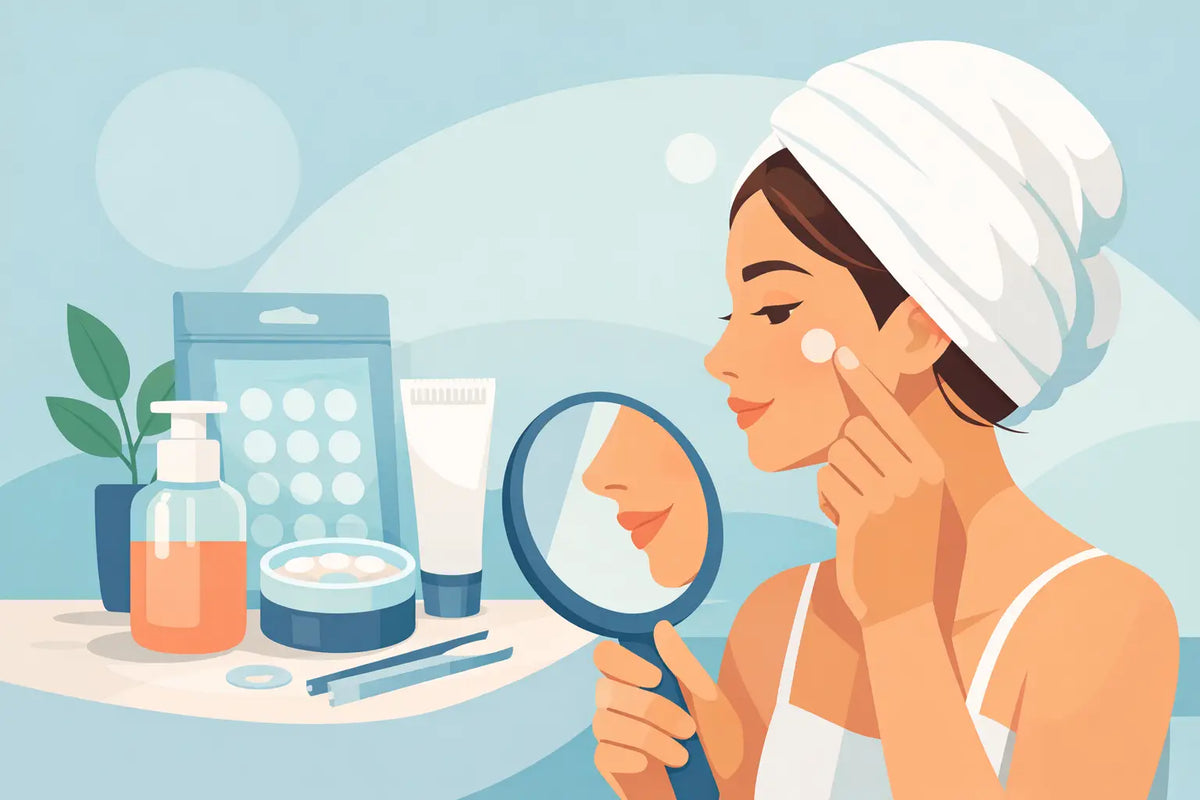
A pimple patch can feel like the smallest possible skincare step, yet it has a very satisfying job: covering a breakout while you get on with your night. To use pimple patches correctly, timing and placement matter more than piling on products. Think of it as a tiny, targeted rescue moment for the blemish that showed up right before dinner, a meeting, or your weekend plans.
The best part? A well-applied patch is low-maintenance. It creates a protective barrier, helps keep fingers away from the area, and turns one frustrating spot into a simple part of your wind-down ritual.
What pimple patches actually do
Most classic pimple patches are made with hydrocolloid, a material designed to absorb fluid. They work especially well on surface-level pimples with a visible whitehead, or on a spot that has already opened and needs to be left alone. As the patch absorbs fluid, it may turn white or look slightly puffy. That is usually your cue that it has been doing its thing.
They are also useful because they make picking harder. We all know the temptation to inspect a breakout a little too closely in the mirror. But squeezing or touching can make a spot look angrier, increase the risk of a lingering mark, and extend the whole situation. A patch gives your skin some personal space.
Not every breakout is a perfect match, though. Deep, sore bumps under the skin do not contain the fluid that hydrocolloid patches are designed to absorb. A patch can still shield that area from touching, but do not expect the same dramatic overnight result. For those breakouts, patience and a gentle, consistent routine tend to be more helpful than trying to force a quick fix.
How to use pimple patches correctly
Start with clean skin. Wash your face with your usual gentle cleanser, then pat it dry completely. This is the detail that makes the biggest difference. A patch needs a dry, product-free surface to adhere well, so do not place it over moisturizer, facial oil, sunscreen, or spot treatment.
If you use an active treatment such as benzoyl peroxide, salicylic acid, or a retinoid, apply it around the breakout rather than directly beneath a standard hydrocolloid patch. Layering products underneath can cause the patch to slide, and it may irritate already-sensitive skin. If you are using a medicated patch, follow its specific directions instead, since those formulas are made differently.
With clean, dry hands, peel away one patch and place it directly over the center of the blemish. Press gently around the edges for a few seconds. You want it to lie flat, not wrinkle or lift. Once it is on, leave it alone. No checking, peeling it back, or moving it to get a better angle.
Wear it for the amount of time stated on the package. Many people like to apply patches before bed and remove them in the morning, while others wear a clear patch during the day. If it becomes fully opaque, loose, or saturated sooner, replace it with a fresh one after cleansing the area.
The right time to put one on
Pimple patches are at their most effective when a blemish is close to the surface. A whitehead with a visible center is usually the sweet spot. Apply one as soon as you notice it, especially if you know you are likely to touch it throughout the day.
They can also be a comforting aftercare step following a pimple that has accidentally opened. First, cleanse gently and make sure the spot is not actively bleeding. Then apply the patch and let it protect the area from makeup, hands, and the general chaos of the day.
For a red bump that has not formed a head, expectations should be softer. The patch may keep you from picking and can make the spot feel less exposed, but it cannot pull out what is still deep beneath the skin. There is nothing wrong with using it for that protective benefit. Just save the overnight transformation hopes for the breakouts hydrocolloid is built to handle.
Keep the rest of your routine calm
When a breakout appears, it is easy to throw every strong product at it. A drying mask, exfoliating acid, scrub, acne treatment, and then a patch can leave your skin feeling more stressed than supported. Instead, let the patch be the targeted step and keep the rest of your routine uncomplicated.
Cleanse, apply your usual treatments around the patch if needed, moisturize the rest of your face, and let your skin rest. If you are wearing a patch overnight, make the evening feel like a proper reset: fresh pillowcase, water nearby, phone down a little earlier. The patch handles the spot while you give the rest of you a moment to unwind.
In the morning, peel it off slowly from one edge. If the blemish looks flatter or less full, resist the urge to keep investigating it. Cleanse as usual, moisturize, and wear sunscreen. Sun protection matters after any breakout because UV exposure can make post-pimple marks look darker and hang around longer.
Daytime patches versus overnight patches
Clear, thin pimple patches can be a great daytime option when you want coverage without a full concealer moment. They can help protect a spot from hair, hands, and makeup brushes while keeping your routine feeling polished. For the smoothest finish, apply the patch to bare, dry skin before any complexion makeup. Avoid putting foundation directly over it unless the patch instructions say it is makeup-friendly.
Overnight patches are ideal when you want to give a breakout uninterrupted time. Choose one that feels comfortable and stays put, then let it work while you sleep. If you toss and turn, press the edges down firmly before bed and avoid applying rich night creams too close to the patch.
Neither option has to be all or nothing. A visible whitehead might benefit from a daytime patch before an event, then a fresh one at night. It depends on how much fluid the spot has, how well the patch is adhering, and how your skin is feeling.
Small mistakes that make patches less effective
The most common issue is applying a patch over skincare. Even a lightweight serum can create enough slip to make it lift at the edges. Apply your patch first, then keep other products away from that small area.
Another mistake is using one patch for too long. Once it is saturated or starts peeling, it is no longer giving you the clean, secure barrier you want. Replace it rather than trying to press it back into place.
Finally, do not treat patches like permission to pop every blemish. Hydrocolloid works beautifully on the right kind of breakout, but creating a wound first can lead to more irritation and a longer healing timeline. Let the patch meet the pimple where it is.
A good pimple patch is not about chasing perfect skin by morning. It is a little act of restraint, care, and confidence: cover the spot, continue your ritual, and let your glow take up the room.


