

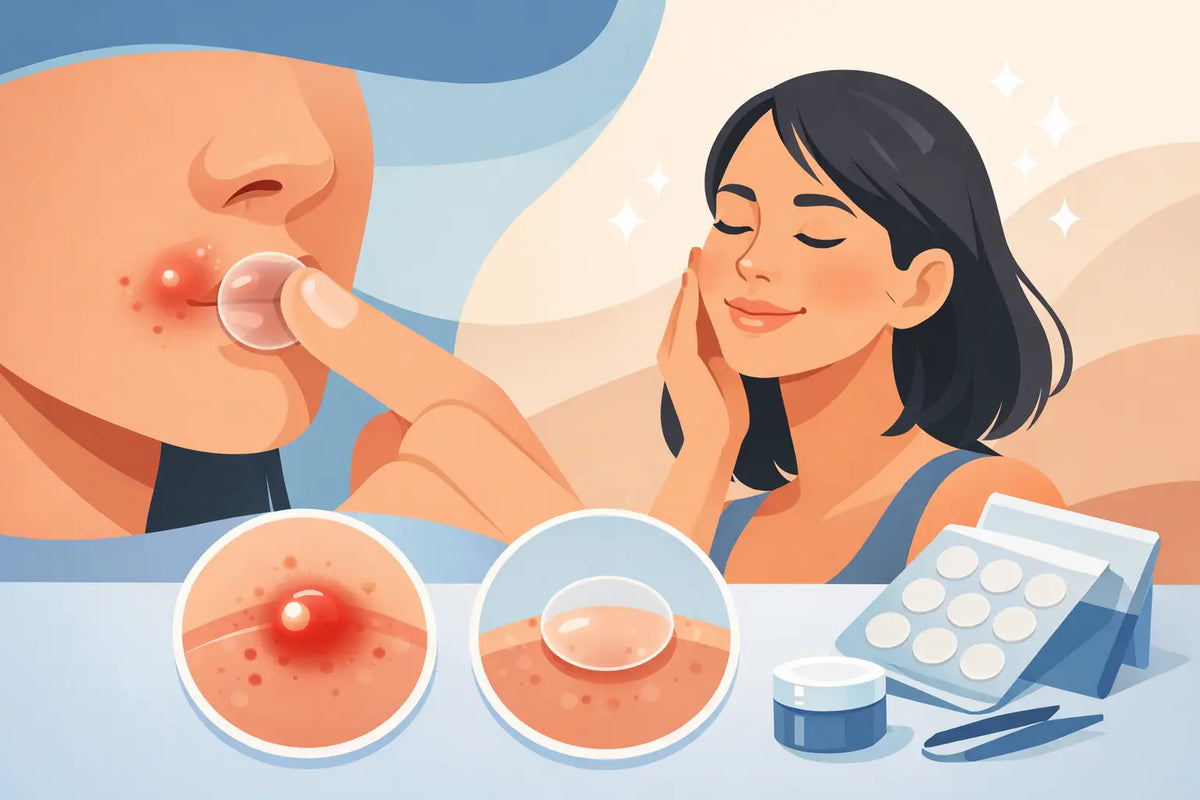
A breakout has a talent for appearing right before dinner plans, a first date, or the morning you want to wear absolutely no makeup. Pimple patches are the small, satisfying rescue step for those moments: a targeted way to cover a blemish, discourage touching, and let your skin have a little peace.
They are not magic, and they will not erase every kind of acne overnight. But when you use the right patch on the right blemish, they can make your routine feel more intentional, less reactive, and a lot more polished.
What Pimple Patches Actually Do
Most classic pimple patches are made with hydrocolloid, a material that absorbs fluid. When placed over a whitehead, a popped blemish, or a spot that is already close to the surface, the patch can soak up oil and fluid while creating a protective seal over the area.
That seal is a major part of the appeal. It helps keep hands off your face, blocks friction from pillows or phone screens, and can stop you from turning one little spot into a bigger, angrier situation. If you tend to pick at a blemish while getting ready, scrolling in bed, or staring into a magnifying mirror, a patch gives your skin a chic little boundary.
Some patches also include ingredients such as salicylic acid, tea tree oil, or niacinamide. These can be useful for certain blemishes, but more is not always more. If your skin is sensitive or your barrier already feels stressed, a simple hydrocolloid patch may be the calmer choice.
Think of a pimple patch as a focused treatment accessory, not a replacement for a consistent routine. Daily cleansing, moisturizing, and SPF still set the tone for clearer, more comfortable-looking skin. The patch is your on-the-spot plus-one when a breakout tries to steal the spotlight.
When Pimple Patches Work Best
The best candidates are blemishes with a visible white or yellow center, spots that have opened on their own, or pimples that are visibly weeping after you have accidentally picked at them. In these moments, hydrocolloid has fluid to absorb, so you are more likely to see that satisfying cloudy spot on the patch when you remove it.
Patches can also be helpful for a small blemish that you simply need to leave alone. Even when there is not much fluid to draw out, covering the area can prevent picking and make it easier to move through your day without constantly checking it.
Deep, tender bumps are different. If a pimple is under the skin, red, swollen, and has no visible head, a basic hydrocolloid patch may not do much beyond protecting it from your fingers. A medicated microdart patch may be designed for this type of spot, but results vary, and irritation is possible. For frequent, painful, or cystic breakouts, it is worth talking with a dermatologist rather than trying to patch your way through every flare-up.
Patches are also not meant for rashes, cuts that need medical care, cold sores, or irritated skin with an unclear cause. When in doubt, skip the experiment and give your skin the gentlest route forward.
How to Use Pimple Patches for Best Results
Timing and prep make a noticeable difference. Apply your patch to clean, completely dry skin. If there is moisturizer, facial oil, sunscreen, or makeup underneath, the adhesive may lift early and the patch may not be able to do its job.
After cleansing, gently pat your skin dry. Choose a patch that fully covers the blemish with a little room around the edges, then press it on for a few seconds. Avoid touching the sticky side more than necessary. It sounds tiny, but clean hands and a clean application help keep the moment skin-friendly.
Leave the patch on for several hours, or overnight if the packaging says it is suitable for extended wear. Once it turns opaque or white, it has likely absorbed fluid and is ready to come off. Peel it away slowly, then cleanse or rinse the area if needed and continue with a gentle moisturizer.
If the spot is still actively draining, you can apply a fresh patch. If it looks dry, irritated, or flattened, let it breathe and keep the rest of your routine simple. Layering strong acids, retinoids, benzoyl peroxide, and a patch all at once can turn a small blemish into a tender, flaky one. Calm skin is always more glamorous than overtreated skin.
A quick pre-event trick
For a blemish that is ready to be covered, try a patch while you sleep or while you are getting ready at home. Remove it before makeup, then use a light hand with concealer. Press product around the spot instead of rubbing directly over it. A flatter, less-picked blemish usually looks better under makeup than one you have tried to aggressively treat all morning.
Make It Part of Your Wind-Down Ritual
Pimple patches shine when they feel like part of your evening reset, not a punishment for having skin. Start with makeup removal and a gentle cleanse, add your usual hydrating steps, and place a patch on any spot that needs a little private time. Then put on your soft pajamas, make your tea, and let your skin clock out too.
This approach matters because breakouts can make it tempting to overhaul everything. You see one pimple and suddenly reach for every exfoliant in the cabinet. Usually, skin responds better to consistency. Keep the rest of your routine comfortable and familiar, especially if your complexion feels dry, tight, or sensitized.
If you use an active treatment like a retinoid or exfoliating acid, consider applying it around the blemish rather than directly beneath the patch. Alternatively, reserve your patch night for hydration and barrier support. There is no prize for making your routine as intense as possible.
Common Pimple Patch Mistakes
The first mistake is applying a patch over skincare or makeup. The patch needs a dry, bare surface to adhere properly. Save your serum and moisturizer for the surrounding skin, or wait until after you remove the patch.
The second is expecting a patch to flatten every blemish by morning. A whitehead may look calmer after one use, while a deeper spot may take several days to settle. The goal is progress, not punishment-level perfection.
Another common move is peeling off a patch too early just to check it. Let it stay put. Repeated lifting creates friction, exposes the blemish, and defeats the low-maintenance point of wearing one.
Finally, do not treat the white residue on a used patch like a scorecard. It can be satisfying to see, but your real win is leaving the blemish alone and allowing it to heal with less interference.
The Little Luxury of Leaving It Alone
There is something quietly powerful about choosing a small, effective step instead of spiraling over a breakout. A pimple patch will not make skin perfectly predictable, and it does not need to. It can make one annoying spot feel covered, cared for, and less likely to become tomorrow's problem.
Keep a few within reach of your nighttime routine, your travel bag, and the bathroom counter before a big weekend. When a blemish arrives uninvited, you can give it a patch, pour something sparkling, and get back to being Happy Hour ready.


