

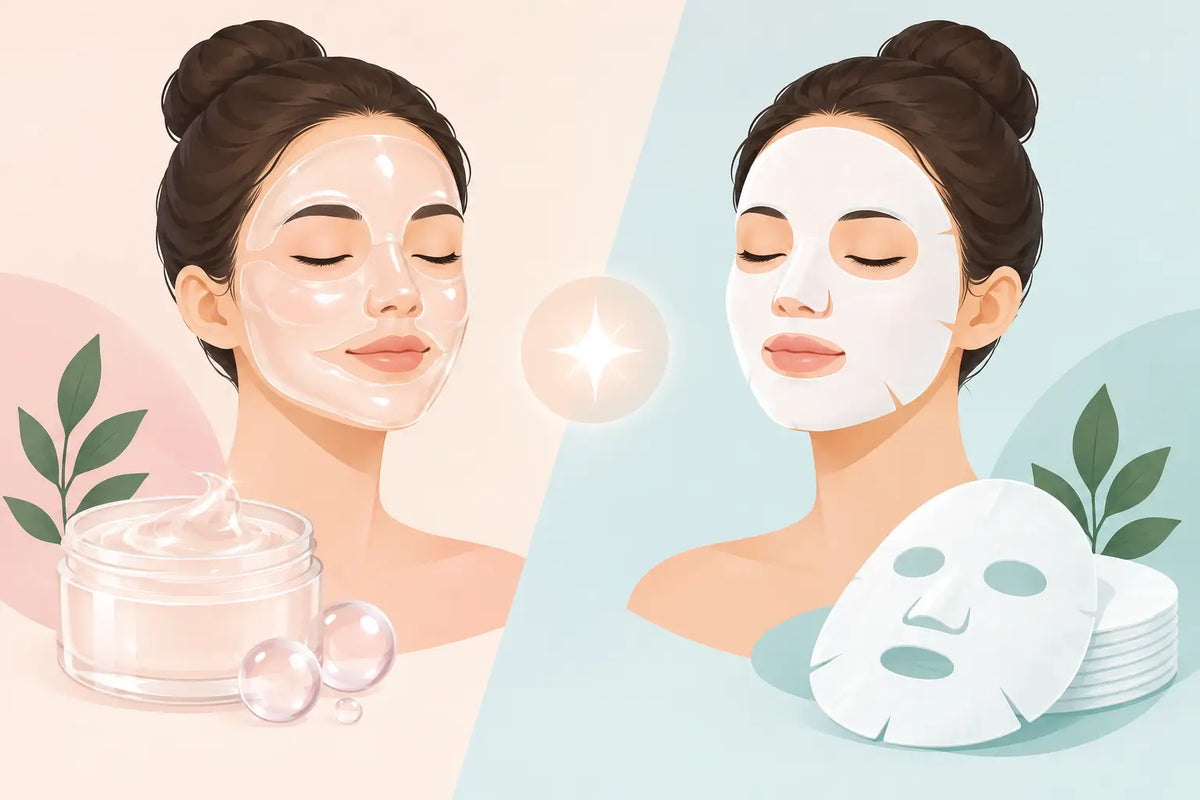
Your skin has had a long day. Maybe it is feeling tight after travel, a little dull before dinner plans, or simply in need of five quiet minutes that feel like yours. That is where the collagen mask versus sheet mask question comes in. Both can deliver a fresh, hydrated look, but they create very different kinds of at-home skin moments.
A traditional sheet mask is a quick splash of moisture. A bio-collagen mask is more of a slow, plush skin reset. Neither is automatically better for everyone. The right pick depends on your skin goals, your schedule, and whether you want a fast refresh or a stay-in-and-glow ritual.
Collagen Mask Versus Sheet Mask: The Main Difference
The biggest difference is the material and how it sits on the skin. A standard sheet mask is usually a thin fabric, cotton, cellulose, or biocellulose sheet soaked in a serum. You unfold it, smooth it over your face, relax for 10 to 20 minutes, and remove it. It is easy, familiar, and ideal when your routine needs a little extra hydration without much planning.
A collagen mask, particularly a bio-collagen or hydrogel-style mask, is typically thicker and more gel-like. It is designed to adhere closely to the contours of your face and hold a concentrated, moisture-rich formula against the skin for longer. Many are made to wear for several hours or overnight, depending on the directions.
Think of the sheet mask as a chilled drink for thirsty skin. The collagen mask is the lingering, candlelit version of the same idea: more time, more contact, and a more cocooning feel.
A quick word on topical collagen
The word collagen carries a lot of beauty buzz. Topical collagen does not simply sink in and rebuild your skin's natural collagen supply. Your body makes its own collagen through complex biological processes, and a mask cannot replace that overnight.
What collagen-containing masks can do is support a smoother-looking, well-hydrated surface. Their formulas and occlusive fit can help skin look temporarily plumper, bouncier, and more rested. That visible fresh-face effect is still worth celebrating. Just think of it as a glow-boosting treatment, not a time machine.
When a Sheet Mask Makes the Most Sense
A sheet mask earns its place when convenience is the entire point. It is a lovely choice before makeup, after a warm shower, following a long flight, or on any evening when your skin feels a little flat but your energy is even flatter.
Because sheet masks are saturated with serum, they can give dry or dehydrated skin a quick dose of humectants and soothing ingredients. Look for formulas featuring glycerin, hyaluronic acid, aloe, ceramides, or niacinamide based on what your skin enjoys. The material matters, too. Biocellulose tends to hug the face more closely than a basic cotton sheet, while cotton can feel light and familiar.
There is a trade-off: standard sheet masks can shift, drip, or lift around the nose and chin. If you are trying to make coffee, answer texts, or finish getting ready while wearing one, the fit may feel less than effortless. They also tend to work best within a shorter window. Leave one on until it dries out, and it may start to pull moisture from the skin rather than leave it feeling comfortable.
Why a Bio-Collagen Mask Feels More Elevated
A bio-collagen mask is made for the nights when skincare is the plan, or at least the first part of it. Its gel texture often feels cooling and cushiony, and a close fit helps it stay put as you wind down. You can watch a show, pack for tomorrow, or slide into bed without repeatedly checking whether the corners have peeled away.
The longer wear time is a major appeal. A mask that remains comfortably in place can give hydrating ingredients more time on the skin, which may leave your complexion looking especially dewy by morning. This makes bio-collagen masks a favorite before an event, after a late night, or whenever your skin needs its “I drink water and sleep eight hours” impression.
The trade-off is that these masks ask for more time and may cost more than a single-use sheet mask. They are not always the most practical choice for a rushed 10-minute routine. If your skin is highly sensitive, check the ingredient list and patch test first, especially if a formula includes fragrance or active ingredients.
Fit changes the experience
A good mask is not only about the serum. It is also about whether it stays where you put it. Hydrogel and bio-collagen masks tend to mold to the face, creating a more secure, second-skin feel. That close contact can make the treatment feel more luxurious and may reduce the urge to lie perfectly still.
Sheet masks can still fit beautifully, particularly higher-quality versions, but the experience is often lighter and less anchored. For some people, that is a plus. If you dislike the feeling of a thicker gel mask or prefer shorter treatments, a classic sheet mask can be exactly right.
Choose Based on Your Skin Mood
If your skin is thirsty and you have 15 minutes before makeup, reach for a sheet mask. Follow with moisturizer to help seal in that hydrated, softened feel. If you are prepping for a big brunch, a date, photos, or a Monday-morning comeback, a bio-collagen mask may be the more satisfying choice.
For dry skin, both formats can be helpful, but choose formulas centered on barrier-friendly moisture rather than heavily fragranced extras. For oily or breakout-prone skin, hydration is still your friend. Look for lighter, non-greasy formulas and avoid treating a mask as a replacement for a balanced routine. For sensitive skin, simple ingredient lists and a shorter first wear are usually the safest bet.
Skin can also change from week to week. A sheet mask might be perfect after too much sun or air conditioning. A collagen mask can feel especially good during colder months, after travel, or when your complexion looks tired in a way concealer cannot quite fix.
How to Get Better Results From Either Mask
Start with clean skin. Makeup, sunscreen, and excess oil can keep the formula from feeling as comfortable and effective as it could. Apply your mask after cleansing, and use a gentle toner or essence first only if that is already part of your routine.
After removing a sheet mask, press any remaining serum into your face, neck, and hands rather than rinsing it away. Finish with moisturizer. For a bio-collagen mask, follow its specific timing instructions. If it is designed for overnight use, apply it as directed and let your usual moisturizer do the supporting work before or after based on the product guidance.
Do not layer a mask over freshly applied strong exfoliants, retinoids, or other potentially irritating actives unless you know your skin tolerates that combination. A glow ritual should feel calming, not like a chemistry experiment. If stinging, burning, or persistent redness shows up, remove the mask and rinse gently.
The Best Choice Is the One You Will Actually Use
There is no need to choose a permanent side in the collagen mask versus sheet mask debate. Keep sheet masks for quick recovery moments and bio-collagen masks for the nights you want your routine to feel a little more special. They can happily share the same skincare shelf.
At Happy Hour Beauty, that is the energy worth keeping: products that work hard, then let you exhale. Make your mask match the moment, pour yourself something sparkling or settle into your favorite show, and let your glow-up feel less like homework and more like a well-earned pause.


