

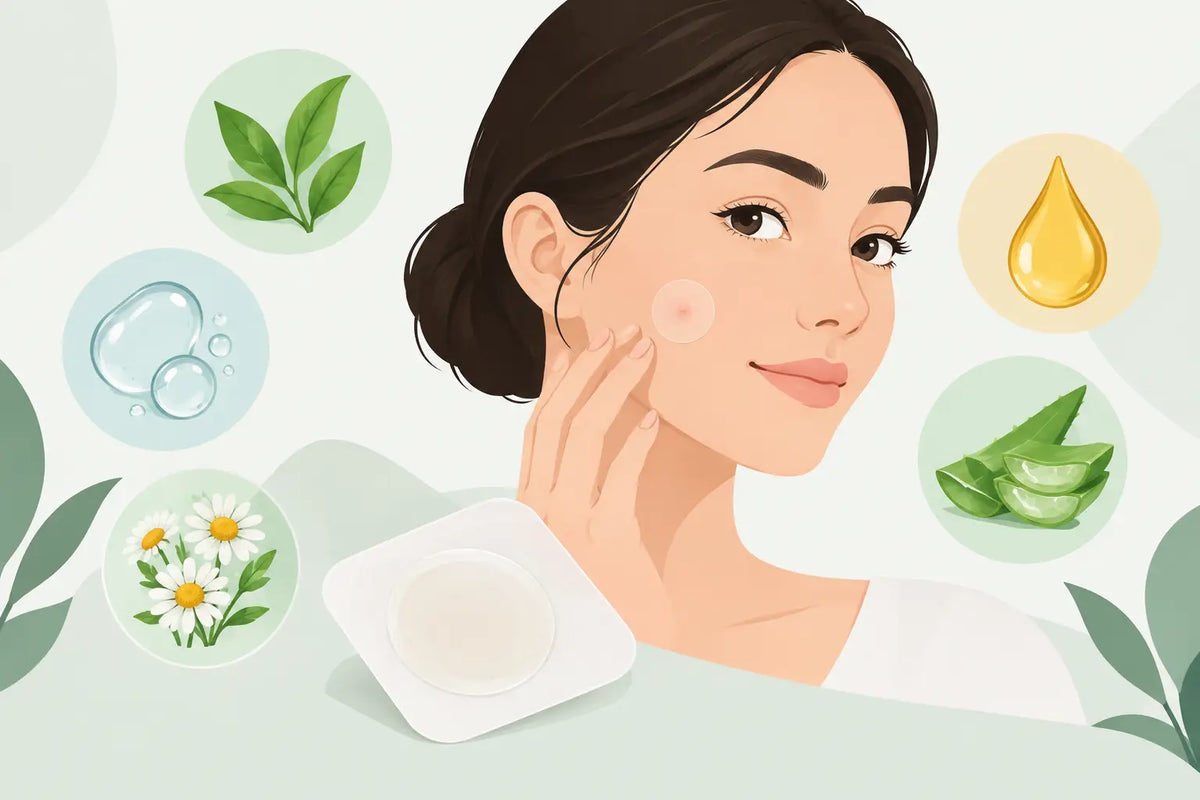
Your breakout picked the worst possible moment. Naturally. Before you reach for a patch, take a closer look at what is actually inside it. The right acne patch ingredients can help protect a spot from wandering fingers, absorb surface fluid, and make your skin feel a little more in control by morning.
Not every pimple patch is built for the same job, though. Some are beautifully simple. Others pair their protective layer with exfoliating, soothing, or blemish-focused ingredients. Knowing the difference helps you choose a patch that suits your skin and your plans, whether you are staying in for a reset night or getting Happy Hour Ready.
The Main Acne Patch Ingredients to Know
Hydrocolloid: the classic spot saver
Hydrocolloid is the ingredient behind most traditional acne patches. It is a moisture-absorbing material originally used in wound dressings, and it works best on pimples that have come to a head, are open, or are releasing fluid.
When placed on clean, dry skin, a hydrocolloid patch creates a protected, slightly moist environment over the blemish. It can absorb fluid and oil from the spot, which is why you may see a white center when you remove it. That visible result is satisfying, but the real win is often less picking, less friction, and a cleaner path for the blemish to settle.
Hydrocolloid patches are usually the gentle choice for a whitehead you want to leave alone. They do not magically erase a deep breakout, but they can make a surface blemish look less dramatic while it heals. Think of them as your quiet, overnight support system.
Salicylic acid: for a little extra pore support
Some acne patches include salicylic acid, a beta hydroxy acid that helps loosen the mix of oil and dead skin cells that can clog pores. This makes it a useful ingredient for a small, active blemish or a cluster of congested-looking spots.
There is a trade-off. Salicylic acid can be drying or sting on compromised skin, especially if you are already using a retinoid, exfoliating toner, or acne treatment elsewhere in your routine. A patch keeps the active more targeted than applying it across your face, but targeted does not always mean irritation-free.
If your skin is sensitive, start with a plain hydrocolloid patch and save stronger treatments for when your barrier feels calm. More ingredients are not automatically better skin care.
Tea tree oil: a botanical with boundaries
Tea tree oil appears in some blemish patches for its purifying reputation. It can feel like a fresh, natural add-on, but essential oils are not a universal match. Tea tree oil may irritate reactive skin, particularly if you are prone to redness, eczema, or fragrance sensitivity.
If you love botanicals and your skin has handled tea tree well before, a tea tree-infused patch may be fine for occasional use. If not, there is no need to force it. A minimalist formula is often the more luxurious choice when your skin is already stressed.
Soothing ingredients: the calm-after-the-chaos crew
Look for ingredients such as centella asiatica, allantoin, niacinamide, aloe, or madecassoside in patches designed to comfort the look of irritated skin. These ingredients are often included to support a calmer-looking finish, especially around a blemish that has been red, tempted, or overtreated.
Niacinamide can help support the skin barrier and improve the appearance of uneven tone over time. Centella and allantoin are beloved for their soothing feel. They will not pull a pimple out overnight, but they can make a treatment patch feel gentler in a routine built around recovery rather than aggression.
What Your Patch Can and Cannot Do
A hydrocolloid patch shines on a whitehead or a pimple that has already surfaced. It can also be useful after an accidental pick, when the main goal is to protect the area and stop the cycle of touching it. Wear it overnight or for several hours, following the product directions, and replace it if it becomes saturated or lifts away.
Deep, sore bumps are different. A standard patch cannot reach far enough below the skin to absorb what is happening beneath the surface. Patches made with tiny dissolving microdarts may deliver ingredients such as salicylic acid, hyaluronic acid, or niacinamide more directly into the upper layers of skin, but results still vary. For a painful, persistent, or cyst-like breakout, patience and a conversation with a dermatologist may be more useful than repeatedly layering patches.
Acne patches also do not replace a consistent routine. Gentle cleansing, sunscreen, and products that your skin tolerates well tend to matter more than one dramatic overnight fix. The patch is the polished finishing touch, not the entire party.
How to Choose a Patch for Your Breakout
Start by reading the blemish, not just the packaging. A juicy whitehead generally calls for plain hydrocolloid. A small, clogged-looking spot may suit a patch with salicylic acid if your skin is used to it. A red mark that has already been picked is often better served by a gentle protective patch with soothing ingredients, rather than a stack of strong actives.
Placement matters, too. Apply your patch to freshly cleansed, completely dry skin before moisturizer, face oil, or SPF. Skincare underneath can keep the adhesive from gripping properly. Press the patch down for a few seconds, then let it do its thing. This is one tiny beauty task that benefits from hands-off energy.
During the day, choose a thin, translucent style if you want discretion under minimal makeup. At night, a larger or thicker hydrocolloid patch can offer more coverage and protection. If you are treating several spots, resist the urge to turn your face into a chemistry experiment. Use patches only where they are needed, and introduce active-infused versions slowly.
Ingredient Red Flags for Sensitive Skin
A patch is small, but it can still cause a reaction. Avoid using active patches on skin that is peeling, cut, freshly shaved, sunburned, or visibly irritated. If you experience persistent burning, itching, swelling, or a rash, remove the patch and stop using it.
Fragrance and essential oils can be a concern for some people, while adhesive itself may bother very sensitive skin. A patch test is a smart move when trying a new formula, especially if your skin tends to be unpredictable. And if you use prescription acne medication, ask your dermatologist how to combine treatments without overdoing it.
The chicest approach to breakouts is not punishing them. Choose acne patch ingredients that meet the moment, give the spot space to calm down, and let the rest of your routine stay soft, simple, and glow-minded.


