

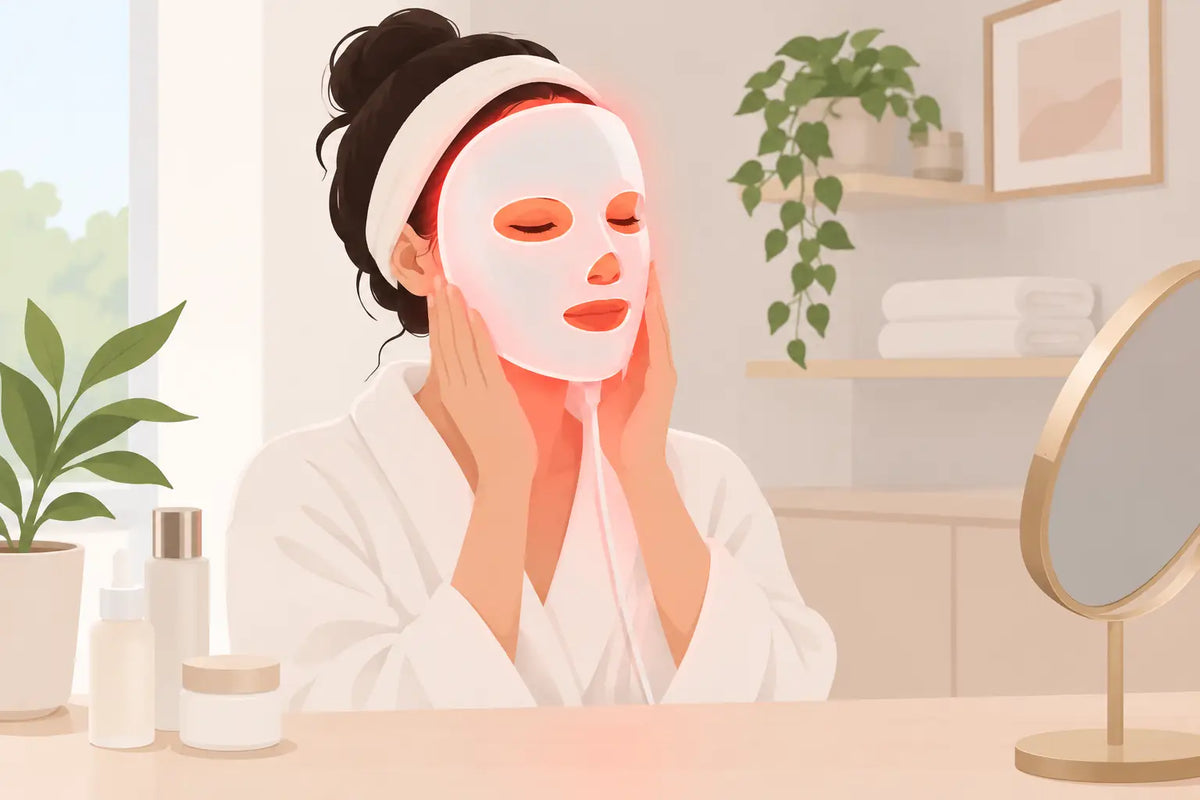
Your skincare routine can be effective without feeling like another calendar commitment. This at home led therapy guide is for the nights when you want to wash off the day, settle in, and give your skin a little extra attention - no appointment, no complicated lineup, no pressure to be perfect.
LED therapy has become a favorite for good reason: it pairs easily with the routines you already love. Think of it as a quiet moment between cleansing and the rest of your evening ritual. With consistency, the right device, and realistic expectations, it can be a beautiful supporting act for clearer-looking, calmer, more luminous skin.
What at-home LED therapy actually does
LED stands for light-emitting diode. An LED mask uses specific wavelengths of visible light to deliver targeted energy to the skin. Unlike UV light, which can damage skin and contributes to sun exposure concerns, LED therapy does not use UV rays. Still, it is not a shortcut around daily SPF. Keep your SPF 50 as the final non-negotiable step in your morning routine.
The colors are not just there for the aesthetic. Red and blue light are the two most common options in at-home devices, and each has a different role. Red light is often used to support a more even-looking, energized complexion and to soften the appearance of fine lines over time. Blue light is commonly used for blemish-prone skin, helping support a clearer-looking routine when breakouts are part of the picture.
Some masks include additional colors, such as near-infrared light. More settings do not automatically mean better results. What matters most is a quality device used according to its directions, plus a routine you can actually keep. The glow comes from showing up for your skin, not from chasing every setting at once.
Your at-home LED therapy guide to choosing a mask
Start with comfort. A mask that feels heavy, pinches around the nose, or makes you avoid using it will not become part of your ritual, no matter how impressive its features sound. Look for a fit that lets you sit back, sip water, answer a few low-stakes texts, or simply close your eyes for a few minutes.
Then consider your main skin goal. If dullness, early visible signs of aging, or a post-long-weekend lack of glow is your concern, red light may be your focus. If you are managing occasional or persistent breakouts, blue light can make more sense. If your device offers both, you can tailor sessions to how your skin is behaving rather than committing to one concern forever.
A few details deserve a closer look before you buy:
- The device should clearly state the wavelengths or light types it uses, rather than relying only on vague glow language.
- Eye protection should be built in or clearly addressed in the instructions.
- Session length, charging needs, and care instructions should fit your real schedule.
- A flexible, well-made design can be easier to use consistently than a device that feels overly fussy.
How to use an LED mask in your routine
The cleanest way to use LED therapy is usually on freshly cleansed, dry skin. Makeup, sunscreen, and a heavy layer of skincare can get in the way of a simple, comfortable session. Start bare-faced, use your mask for the recommended time, then move into the hydrating steps that make your skin feel cared for.
A lovely evening flow might look like this: remove makeup with a gentle cloth, cleanse, pat skin dry, and use your LED mask. Follow with a soothing serum or moisturizer, then add eye patches on nights when you want that extra refreshed, just-rested look. Save strong exfoliating acids or retinoids for separate nights at first, especially if your skin tends to be sensitive.
You do not need a 12-step routine to make this work. In fact, a simpler approach often makes it easier to notice what your skin likes. The Happy Hour Beauty LED mask fits nicely into that kind of low-effort, high-feel-good ritual: a few minutes for you, followed by the products that leave your skin comfortable and moisturized.
Timing matters less than consistency
Most at-home devices are intended to be used several times per week, though the exact schedule depends on the mask. Follow the brand's directions rather than extending sessions in hopes of faster results. More light is not necessarily more effective, and extra time may simply irritate sensitive skin.
Choose a time you can repeat. Maybe it is while your dinner is in the oven, after a shower, or during the first ten minutes of your wind-down. A mask used regularly for short, recommended sessions is far more useful than one reserved for a once-a-month everything shower.
What results can you expect?
Think gradual, not overnight. Some people notice a temporary post-session brightness simply because they have paused, cleansed, and hydrated. Changes in the look of texture, tone, fine lines, or breakouts generally take weeks of consistent use to become noticeable.
Results also depend on the concern. A person using red light as part of a glow-focused routine may see a different experience than someone using blue light alongside a dermatologist-approved acne plan. Hormonal breakouts, deeper cystic acne, pigmentation, and significant sensitivity often need more than an LED mask alone.
Good skincare basics still carry the routine. Gentle cleansing, hydration, sunscreen, and avoiding the temptation to pick at blemishes are not glamorous, but they create the conditions where your LED habit can shine. Consider your mask a supportive ritual, not a magic wand.
Keep your skin comfortable
LED therapy is generally considered noninvasive, but skin is personal. Begin slowly if you are new to it, especially if you are reactive or already using active ingredients. Stop if you experience discomfort, redness that lingers, a rash, headaches, or any reaction that feels off for you.
If you take medications that increase light sensitivity, have a photosensitive condition, are pregnant, or are under a doctor's care for a skin concern, check with a qualified medical professional before starting. This is also wise if you have a history of migraines triggered by bright light or have recently had a procedure that changed your skincare instructions.
Clean the device after use as directed, particularly where it touches the face. A clean mask keeps the ritual feeling fresh and helps prevent makeup, oil, or product residue from building up. Let it become the kind of self-care item you are happy to see on your vanity, not another thing waiting to be dealt with.
A little glow, on your schedule
The best LED routine is the one that feels easy enough to repeat. Set the mood, keep your skin prep simple, and give the results room to build. Some nights call for a full glow ritual with a hydrating mask and eye patches; other nights, a clean face and a few quiet minutes under the light is more than enough.
Your skin does not need perfection to look cared for. It needs consistent, thoughtful moments that fit into the life you are already living - preferably with a little softness, a little shine, and a reason to look forward to getting home.


