

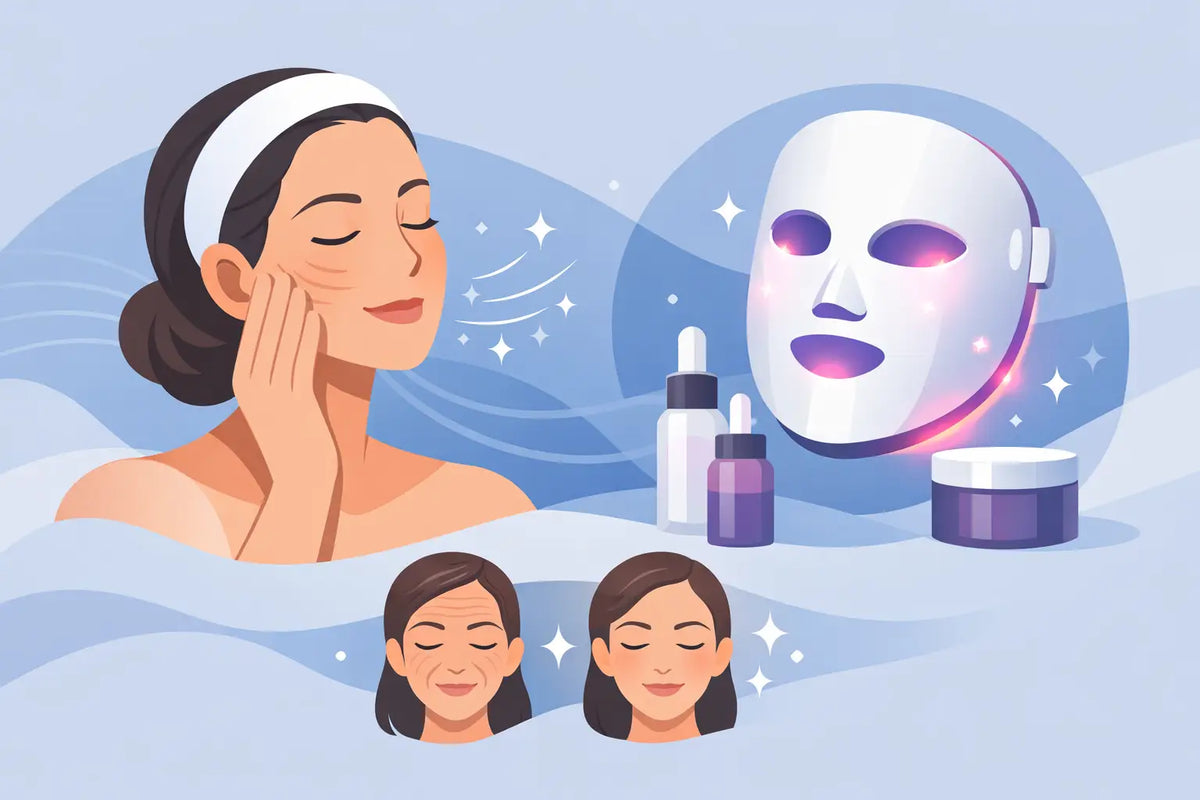
Fine lines tend to show up right when you are asking more from your skin: after a packed week, a little too much sun, or one too many late-night scrolls. So, can LED masks help wrinkles? They can support smoother-looking, more radiant skin over time, especially when red light is used consistently. Think of an LED mask as a calm, at-home ritual with real skincare potential, not a one-session eraser for every line.
For anyone who wants a little more glow without adding a complicated appointment to the calendar, that distinction is good news. LED therapy is easy to fold into the kind of routine you can actually keep.
How LED masks can help wrinkles
At-home LED masks use specific wavelengths of light to support the skin in different ways. For wrinkles and fine lines, red light and near-infrared light are the settings to look for. These wavelengths are commonly studied for their ability to encourage the skin’s natural collagen-supporting processes and help improve the appearance of firmness, texture, and fine lines over time.
Collagen is one of the proteins that helps skin look bouncy and smooth. As we age, natural collagen production slows, while everyday factors like UV exposure, stress, and sleep changes can make lines look more noticeable. Red and near-infrared light do not replace collagen overnight. Instead, with repeated use, they may help create the conditions for skin to look fresher, a little plumper, and more even.
That is why the best LED results are usually subtle at first. You may notice a healthier-looking glow or softer texture before you see a difference in the fine lines around your eyes, forehead, or smile lines. The payoff is in the consistency.
Red light versus near-infrared light
Red light is visible to the eye and is often used in skincare devices for surface-level rejuvenation concerns, including dullness and the look of fine lines. Near-infrared light is invisible and reaches deeper than red light. Many masks pair the two because they can complement each other in a wrinkle-focused routine.
Not every LED mask has the same wavelength range, power output, fit, or treatment time. A well-designed mask that you will comfortably use three to five times a week can be more valuable than a complicated device that stays in a drawer. A great beauty ritual should feel like a pause, not a project.
What results can you realistically expect?
LED masks can help soften the appearance of fine lines and support a more rested-looking complexion. They are not likely to erase deep, etched-in wrinkles, dramatically lift loose skin, or deliver the same result as an in-office procedure. That does not make them less worthwhile. It simply means they shine as a steady, supportive part of your long game.
Results depend on your skin, the device, how often you use it, and the rest of your routine. Someone who wears sunscreen daily and treats their skin gently will usually give their glow-focused habits a better chance to work than someone relying on light therapy alone after regular sun exposure.
Most people need several weeks of consistent sessions before assessing changes. A reasonable window is around eight to 12 weeks, though some people notice a more luminous look sooner. Take a bare-faced photo in the same lighting before you begin, then check in monthly. It is easier to spot gradual progress this way than by studying the mirror after every treatment.
The lines LED may help most
An LED mask is often best suited to early fine lines, mild texture changes, and the overall look of skin that has lost some of its fresh-from-vacation energy. It can be especially appealing if your goal is maintenance: keeping skin looking cared for, hydrated, and bright as part of a routine you enjoy.
For deeper wrinkles caused by years of sun exposure or repeated facial movement, expect improvement in softness and skin quality rather than a total reset. If a line is visible when your face is completely relaxed, it may need more than an at-home device to change significantly.
How to use an LED mask for the best glow
Start with clean, dry skin unless your device instructions say otherwise. Heavy creams, sunscreen, or makeup can create a barrier between the light and your skin, so save your serums and moisturizer for after your session. Then settle in for the recommended treatment time. Many masks are designed for short sessions, making them easy to use while you choose an outfit, make tea, or enjoy a quiet pre-bed moment.
Consistency matters more than doing extra-long sessions. More light is not automatically better, and using a device beyond its directions is unlikely to speed up results. Follow the brand’s recommended schedule, which is often a few treatments per week, and give your skin time to respond.
Afterward, reach for a simple hydrating routine. A gentle serum and moisturizer can help skin feel comfortable and nourished. In the daytime, SPF 50 is non-negotiable. Sun protection is the daily habit that protects the progress you are trying to make. There is little sense in investing in a wrinkle-focused ritual at night if UV exposure is quietly working against it all day.
Can LED masks help wrinkles alongside retinol?
Usually, yes, but the timing matters if your skin is sensitive. LED light itself is generally noninvasive, while retinoids can be active and occasionally irritating as your skin adjusts. You may prefer to use your LED mask on clean skin, then apply your retinol afterward if your skin tolerates that combination well. Or alternate evenings until you know what feels best.
The bigger rule is not to push through irritation. If your skin is red, flaky, stinging, or extra reactive, simplify. Use your light therapy as directed, focus on hydration, and ease back into stronger actives slowly. A calm barrier is always more glamorous than an overworked routine.
Safety and smart expectations
Quality matters with any beauty device. Choose an LED mask from a reputable brand, follow the included instructions, and use any provided eye protection as directed. If you have a medical condition affected by light, take medications that increase light sensitivity, are managing a skin condition, or are pregnant, check with your dermatologist or healthcare provider before starting.
It is also smart to pause if a session causes discomfort or unusual irritation. LED therapy should feel easy. A little warmth may be normal depending on the mask, but burning, pain, or prolonged redness are not part of a good self-care night.
Make it a ritual worth repeating
The most effective skincare routine is rarely the most crowded one. It is the one that fits your real life and feels good enough to repeat. An LED mask can turn 10 quiet minutes into a small act of future-you care: clean skin, red light, a comforting moisturizer, and sunscreen waiting for tomorrow morning.
Happy Hour Beauty is built around that kind of energy - everyday maintenance, elevated into a moment you look forward to. Give your mask time, keep your expectations grounded, and let consistency do its softly glowing thing.


