

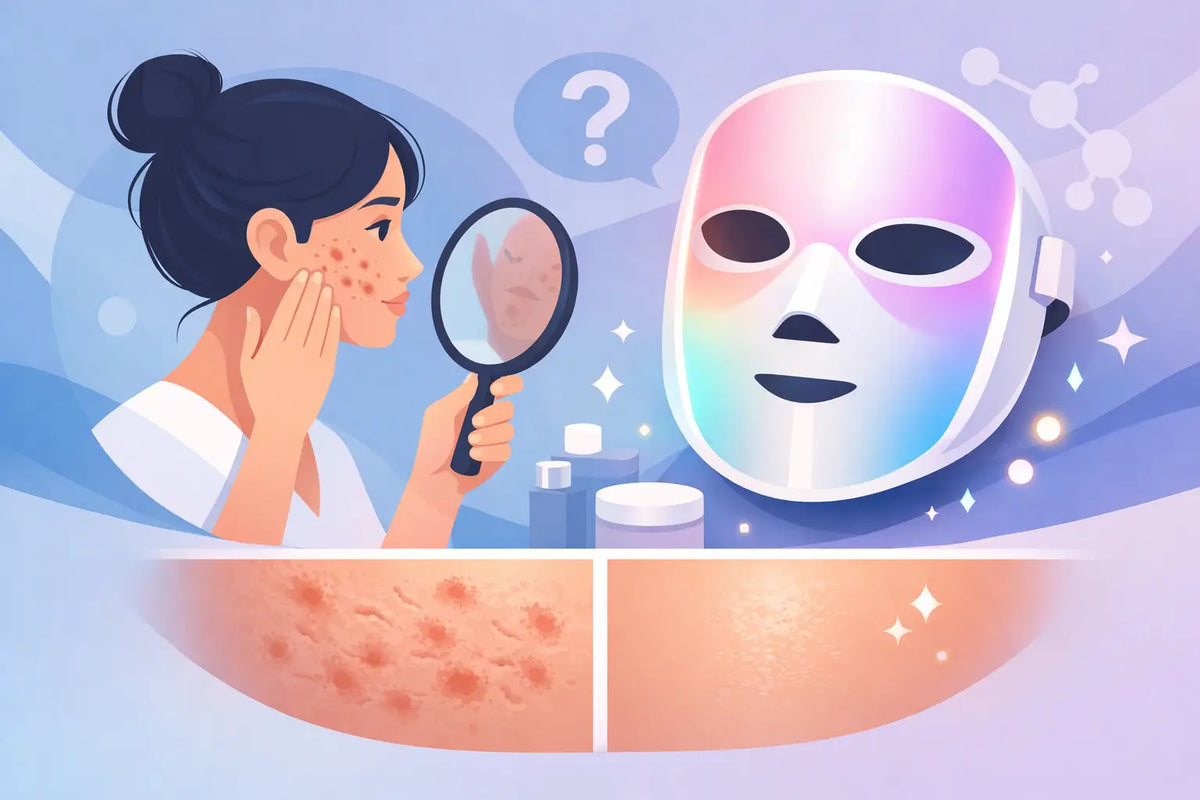
Some acne marks linger long after the breakout is gone, and that is usually the frustrating part. You finally get your skin calm, then you are left with red, brown, or uneven spots that keep your complexion from looking as fresh as it feels. If you have been eyeing a led mask for acne scars, the real question is not whether it is trendy. It is whether it can actually help your skin look smoother, clearer, and more even over time.
What a led mask for acne scars can actually do
Let’s start with the part most people skip. Acne scars are not all the same, and that changes what an LED mask can realistically improve.
If you are dealing with post-acne marks, like lingering redness or dark spots after a breakout, LED light therapy may be a very good fit. These marks are often confused with true scars, but they are different. Redness and discoloration sit more on the surface, so they can gradually fade with the right support.
If you have indented acne scars, like ice pick, boxcar, or rolling scars, an LED mask can still be part of your routine, but it is not likely to dramatically change skin texture on its own. Those scar types involve structural changes deeper in the skin. Light therapy may help support overall skin health and reduce inflammation, but it usually works best as a complement, not the whole plan.
That is the first trade-off to understand. A led mask for acne scars can be helpful, but the kind of scar matters more than the marketing.
Why LED light therapy gets so much attention
The appeal is easy to understand. It is simple, noninvasive, and fits into real life. You do not need downtime, and you do not have to clear your entire schedule for a treatment. For anyone trying to keep skincare effective but still low effort, that matters.
LED masks use specific wavelengths of light to target different skin concerns. The two that matter most in the acne-and-after category are blue light and red light.
Blue light and active breakouts
Blue light is usually associated with acne because it helps target acne-causing bacteria on the skin. If your breakouts are still active, blue light can help reduce that cycle. And fewer breakouts means fewer new marks left behind.
This is part of why LED masks can be useful for acne scars in a more indirect way. They are not just about treating the aftermath. They can also help prevent the next round.
Red light and post-acne recovery
Red light is where things get more interesting for acne marks. It is commonly used to support skin recovery, calm visible inflammation, and encourage a healthier-looking complexion. For skin that stays pink, irritated, or uneven after breakouts, red light may help the skin look more balanced over time.
It is not an overnight fix. Think gradual glow, not instant eraser. But for many people, that slower, steadier improvement is exactly what makes the routine sustainable.
What results usually look like
The best way to go into LED light therapy is with a little optimism and a lot of realism. A good mask can help your skin look calmer, more even, and less reactive. You may notice that post-breakout redness fades faster. Your overall tone may start to look smoother. Skin can also appear a little fresher and more rested, which never hurts.
What you are less likely to get is a dramatic resurfacing effect. Deep pitted scars usually need treatments that trigger more intensive collagen remodeling, such as microneedling, lasers, or certain in-office procedures. LED can support the skin around that process, but it is not the same category of treatment.
So yes, a led mask for acne scars can be worth it, especially if your main issue is discoloration or if you want to stay consistent with something gentle. If your concern is deep texture, it is better to think of LED as part of your skin maintenance era, not the whole transformation.
How to use an LED mask without making your routine complicated
This is where LED masks really shine. They are easiest to stick with when they feel like a ritual, not homework.
Start with clean, dry skin. Skip heavy creams before your session unless the product instructions say otherwise. Then use the mask for the recommended time, usually a short session several times a week. Consistency matters more than overdoing it. Using it once in a while when you remember is not likely to get you very far.
After your session, follow with skincare that supports barrier health and brightness. That might mean a hydrating serum, a simple moisturizer, or ingredients aimed at post-acne marks. If you are using exfoliants or stronger actives in the same routine, pay attention to how your skin feels. LED is gentle, but your overall routine still needs balance.
A lot of skin setbacks happen when people try to do everything at once. If your face feels tight, irritated, or overstimulated, pull back and keep it simple.
The best routine pairing for acne marks
An LED mask works best when it is not carrying the whole routine by itself. If acne scars or marks are your focus, support it with products that target tone and recovery.
Gentle cleansing keeps skin from getting stripped. Hydration helps maintain a healthy barrier, which is especially important if your skin is breakout-prone and easily irritated. Daily sunscreen is nonnegotiable if you are trying to fade post-acne discoloration. Without it, marks can hang around longer or get darker.
If your skin tolerates active ingredients well, you might also use options like niacinamide, azelaic acid, or mild exfoliants in separate steps. The exact combination depends on your skin. Sensitive skin usually does better with fewer variables and more patience.
That is the part nobody loves hearing, but it is true. When it comes to acne marks, slow and steady usually looks better than aggressive and inconsistent.
Who should try a led mask for acne scars
If your skin tends to go through this pattern - breakout, healing, lingering redness, then another breakout before the last mark has faded - LED can make a lot of sense. It is especially appealing if you want something easy to use at home and gentle enough to become part of your weekly reset.
It may also be a great fit if your skin gets stressed easily with stronger treatments. Not everyone wants peels, intense exfoliation, or frequent in-office appointments. An LED mask offers a softer approach that still feels results-focused.
Where it may be less satisfying is if you expect one device to fully remove years of textured scarring. That does not mean it is useless. It just means your expectations should match what the technology is best at.
What to look for before you buy
Not every LED mask is the same, and appearance alone does not tell you much. Comfort matters because if a mask is awkward or irritating, you will not use it consistently. The light settings matter too, especially if you want both blue and red light options for active breakouts and post-breakout recovery.
You also want clear usage guidance. A good device should make it easy to understand how often to use it and for how long. The best beauty tools are the ones that fit into your actual life, not the fantasy version where you have endless time and perfect habits.
For a brand like Happy Hour Beauty, that kind of ease is the whole point. Skincare works better when it feels like a moment you want, not another task on your list.
The real answer: is it worth it?
If your acne scars are really post-acne marks, especially redness or discoloration, an LED mask can absolutely be worth trying. It is low-lift, gentle, and easy to make part of an elevated daily routine. If your scars are deeper and more textured, it is still useful, but more as support than as the star treatment.
That is the honest answer. Not magic, not hype, and not a waste either.
The sweet spot is knowing what your skin is asking for. If it needs calm, consistency, and a little help getting back to even, an LED mask can be one of those beauty tools that quietly earns its place on your vanity - and in your wind-down routine.


