

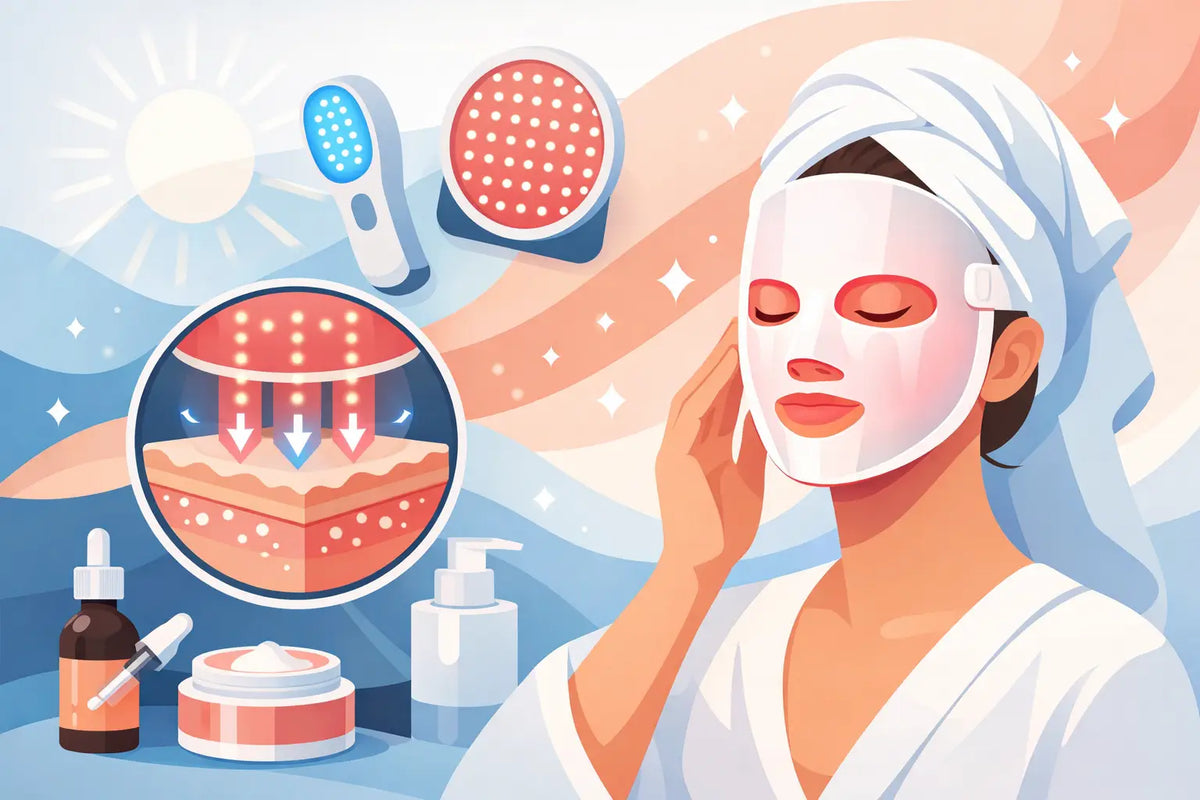
A few minutes under a soft wash of light can feel like the most productive kind of pause: phone down, face clean, nowhere to be. This LED skincare guide is for making that ritual feel less mysterious and more intentional, whether your goal is a calmer-looking complexion, a little more bounce, or a reset after a breakout-heavy week.
LED masks have earned a place beside eye patches, facial masks, and SPF because they fit real life. There is no appointment to schedule and no recovery time to plan around. The catch? Consistency matters more than a single extra-long session, and the best color for your skin depends on what you are hoping to see in the mirror.
LED Skincare Guide: What the Light Is Doing
LED stands for light-emitting diode. These devices use specific wavelengths of visible light that interact with the skin at different depths. Unlike UV light from the sun, at-home LED masks are designed without ultraviolet rays. That does not mean they replace sunscreen - your daily SPF 50 is still the non-negotiable morning step that protects the glow you are working for.
The experience itself is simple. You wear the mask for a set amount of time, usually around 10 to 20 minutes depending on the device, while the light does its quiet work. Results tend to build gradually. Think less overnight transformation, more polished consistency: the kind of skin shift people notice after you have kept a great routine for several weeks.
Not every LED device is made alike. Fit, comfort, wavelength range, treatment time, and eye protection all affect whether you will actually use it often enough to get value from it. A mask that feels easy to wear is usually a better investment than one with an intimidating menu of settings you never reach for.
The LED Colors and When to Use Them
Most at-home masks focus on red and blue light, sometimes with near-infrared light included. You may also see green, amber, or purple settings. The color is not just there for the mood, although a little mood never hurts.
Red light for a more radiant-looking routine
Red light is the go-to setting for skin that looks dull, tired, or less firm than you would like. It is commonly used to support the appearance of smoother texture, a more even-looking tone, and soft, healthy-looking radiance. It is a lovely choice when your skin is generally calm and you want to make your evening ritual feel more treatment-focused.
Red light is also the setting many people reach for as part of a long-game approach to visible fine lines. Keep expectations chic but realistic: LED is not a substitute for injectables, professional procedures, or a prescription plan. It can be a beautiful supporting player in a consistent routine.
Blue light for breakout-prone days
Blue light is typically used for acne-prone skin because it can help target acne-causing bacteria on the skin. If you tend to get the same frustrating spots around your chin, jaw, or forehead, blue light may be the setting that earns its regular place in your routine.
It works best when you pair it with restraint. Avoid piling on aggressive exfoliants, drying spot treatments, and every active in your cabinet just because a breakout showed up. Use your LED session, choose a gentle cleanser, and apply a simple hydrator. Save a pimple patch for the individual blemish that needs its own little rescue plan.
Near-infrared light for extra support
Near-infrared light is invisible, but it is often paired with red light in at-home devices. It is designed to reach deeper than visible red light and is commonly included in routines focused on the look of firmness, texture, and overall skin renewal.
You do not need to chase every wavelength. If your mask combines red and near-infrared, use the programmed setting as directed. If it does not, a consistent red-light practice can still be a smart, simple place to start.
Green, amber, and mixed-light settings
These settings are often marketed for the look of discoloration, redness, or general brightness. Research and device quality can vary more here than with red and blue light, so it helps to stay curious rather than promise yourself a miracle. If a mixed-light setting feels good and your skin responds well, enjoy it. Just keep your core routine grounded in the basics that always matter: gentle cleansing, hydration, and daily sunscreen.
How to Use an LED Mask Without Overcomplicating It
The best time for LED is whenever you can repeat it. For most people, evening is ideal because it creates a natural little boundary between the day you had and the night ahead. Clean skin first, then light, then the rest of your routine.
Start with a freshly cleansed, completely dry face. Heavy creams, facial oils, and tinted SPF can create a barrier between your skin and the device, so keep the first step bare. Some masks allow a water-based serum underneath, while others recommend using the device only on clean, dry skin. Follow your specific device instructions over any general advice.
After your session, apply the products that make your skin feel comfortable and cared for. A hydrating serum, a nourishing moisturizer, or a bio-collagen mask on a night when you want the full at-home facial feeling can make the ritual feel extra special. If you use stronger actives such as retinoids or exfoliating acids, it is usually wise to keep those on separate nights at first, especially if your skin is sensitive.
Frequency depends on the device, but many masks are intended for several short sessions per week. More is not necessarily better. Extending a session beyond the recommended time will not fast-track your results, and using a mask too often can be irritating for some complexions. Put it on your calendar, not on a pedestal.
A practical rhythm might look like red light three to five nights a week for a glow-focused routine, or blue light according to your device instructions during a breakout-prone stretch. Give it at least four to eight weeks of steady use before deciding whether it belongs in your permanent lineup. Take a makeup-free photo in similar lighting before you begin if you want a more honest way to track subtle changes.
Pair LED With the Rest of Your Routine
LED works best when it is not asked to carry your entire skincare routine. Think of it as the elevated middle step - a focused moment between cleansing and moisturizing - rather than a replacement for everything else.
In the morning, cleanse as needed, moisturize, and finish with broad-spectrum SPF 50. If you are managing breakouts, choose formulas that feel comfortable and non-clogging for your skin. If dehydration is your issue, prioritize layers that add moisture without making your routine feel like a chemistry experiment.
At night, keep the order easy: remove makeup thoroughly, cleanse, use your LED mask on bare skin, then apply hydration. On busier evenings, that can be enough. On slower nights, add eye patches while you make tea, or settle into a mask after your light session. The goal is not a 12-step performance. It is a ritual you genuinely look forward to.
Happy Hour Beauty is built around that exact kind of energy: effective beauty maintenance that still feels like a small celebration. Your routine can be practical and pretty at the same time.
LED Safety: A Few Smart Boundaries
At-home LED masks are generally designed to be gentle, but “gentle” is not the same as right for every person at every moment. Read the device manual, use any included eye protection as directed, and stop if you notice discomfort, headaches, increased redness, or an unusual reaction.
Check with a dermatologist or healthcare professional before using LED therapy if you have a photosensitivity condition, take medication that makes you sensitive to light, have an eye condition, are managing a significant skin disorder, or are unsure how it fits with a treatment plan. Pregnancy guidance can vary by device and provider, so this is another moment to ask your clinician rather than guess.
Do not use LED as a reason to skip professional help for painful, cystic, scarring, or persistent acne. Blue light can be a helpful addition, but serious acne often needs a more personalized approach. Likewise, changing moles, severe pigmentation changes, and rashes deserve medical attention, not another setting on a mask.
Make Your Glow Habit Stick
The most luxurious routine is the one that does not ask too much of you. Keep your LED mask somewhere visible, pair it with a habit you already have, and give yourself permission to keep the rest of the evening simple. Ten quiet minutes while you listen to a playlist, catch up on a comfort show, or do absolutely nothing is still time well spent.
Your skin does not need a dramatic overhaul to look more cared for. It needs the small, repeatable gestures that say you showed up for yourself - one soft glow session at a time.


